
Noble Titles | Hierarchy
Duke, Prince, Count or Baron: Just a single word can give a name a completely different impact. Added prefixes like “von,” “zu,” or “von und zu” hint at origin, residence, and possessions in just a few syllables. A noble title, therefore, consists not only of a rank. It is a small linguistic composition.
Historically, these forms were by no means interchangeable. They denoted very different positions within a socially stratified society. A duke had different duties and rights than a count, a “zu” could express a connection to a current seat, and a “von” could refer to origin or family name.
Today’s personal selection is not about restoring a historical hierarchy. What matters are the sound, style, and the story you wish to connect with your title. This page explains the differences openly and understandably – so that you not only know which title sounds impressive but also why.
Three Things That Are Often Confused
When discussing noble titles, one often refers to multiple levels at once. For a clear overview, a simple distinction helps:
- The Rank refers to the historical position, such as Duke, Prince, Count, or Baron.
- The Name Form connects rank and personal name, for example, “Count Max von Falkenstein.”
- The Noble Prefix is a component like “von,” “zu,” or “von und zu,” which could indicate a specific development within historical names.
In addition, there are Forms of Address such as “Your Highness” or “Your Grace.” They were part of courtly and social conventions but are not identical to the title itself. A prince remained a prince even if no one had time for a formal address at the moment.
Historical Hierarchy – Why Not Every Title Meant the Same
There was no single, universally identical ranking of European nobility at all times. Empires, kingdoms, and regions developed their own rules. Titles could be hereditary, conferred, tied to an office, or associated with a specific territory. Even identical ranks had very different political significance depending on the era.
As a rough guide, emperors and kings stood at the top of monarchical orders. Below them followed various princely ranks in the German-speaking world, then counts and barons, as well as knights and the so-called untitled nobility. Within these groups, there were again gradations, special forms, and regional peculiarities.
The hierarchy, therefore, does not tell a simple ladder where each title stands exactly one step higher or lower. It is more like a historical map. Those who look closely will discover imperial princes, nobility, landgraves, margraves, count palatines, and numerous forms whose actual influence depended much more on time, possessions, and political context than solely on the title.
A Rough Guide
- Emperor and King
- Elector, Archduke, and Grand Duke
- Duke
- Prince
- Margrave, Landgrave, and Count Palatine
- Count
- Baron and Baroness
- Knight, Noble, and Untitled Nobility
This overview is deliberately simplified. The complete historical classification always depends on the country and era.

Emperor, King, and Elector – Titles at the Top of State Order
Emperors and kings were not mere noble ranks but titles of sovereignty. They represented the pinnacle of an empire or kingdom and were associated with state sovereignty. For this reason, they fundamentally differ from a personal noble title. A modern title purchase does not make anyone a head of state – and fortunately also spares the need for writing a throne speech.
A special role was played by the Elector in the Holy Roman Empire. The electors formed a small circle of powerful imperial princes who had the right to elect the Roman-German king. The word “Kur” derives from “küren,” meaning to choose. Thus, the title expresses not only a high rank but also a very specific political function.
Archduke was primarily associated with the House of Habsburg and Austria. Grand Duke referred to the ruler of a Grand Duchy. Both forms sound like enhancements of the duke but arose in specific dynastic and state contexts. Historical titles cannot always be sorted like clothing sizes from “large” to “larger.”

The medieval hierarchy was by no means a rigid, peaceful set of rules, but often a highly absurd minefield driven by vanity and bizarre formalities.
Behind the so-called precedence dispute lay a veritable diplomatic nightmare that often escalated into outright brawls. As a noble’s reputation was directly measured by who entered a room first, who sat closest to the monarch, or whose carriage led the convoy, envoys would block city gates for hours during ceremonial entries. No one wanted to give an inch to the other, as yielding in front of an assembled crowd would equate to a permanent loss of rank for the entire dynasty. When good persuasion failed, the coachmen would simply whip their horses or deliberately entangle their shafts to stop the competitor. At royal banquets, such vanities regularly escalated into full-blown brawls with flying pewter jugs, simply because two counts simultaneously claimed the same seat next to the ruler.
In the Holy Roman Empire, the rights of imperial offices led to even more curious developments, as the most powerful men defined their superior status through seemingly banal servant jobs at the imperial court. During the coronation festivities in Frankfurt, the King of Bohemia insisted on personally filling the cup for the emperor as the royal cupbearer. The Count Palatine of the Rhine served as the Grand Steward, the Duke of Saxony rode in as the Grand Marshal with a silver measure of oats, and the Margrave of Brandenburg carried the washbasin and linen cloth as the Grand Chamberlain. These symbolic menial services were so highly coveted that they sparked decades-long inheritance disputes. No other prince would have dared to offer the emperor a bowl of water uninvited, as that would have been considered a severe overreach and could have triggered a serious state crisis.
Those at the top had their social status directly read from their feet – specifically through the outrageous lengths of the pointed shoes, known as Poulaines. Around 1360, meticulous dress codes regulated to the centimeter who could drag how much point through the streets. A simple citizen had to settle for a cap with a maximum half-foot length, a baron could have the entire foot length, and princes or kings wore points measuring more than double their actual shoe size. Since one could only waddle like a duck with points up to sixty centimeters long, they helped themselves with whale bones, chains, or silk cords tied just below the knees. Even while dancing, the fabric tubes caused embarrassing belly flops in front of noble ladies, and in serious combat, the noble knights had to hastily hack off their status symbols with their swords to avoid tripping over their own prestige.
Even hunting, the undisputed favorite pastime of the high nobility, was hierarchically censored down to the smallest detail – particularly through the strict right of falconry. The legendary English Boke of Saint Albans precisely stipulated which bird of prey could land on which fist. An emperor was entitled to the eagle alone, a king carried the majestic gyrfalcon, while a count had to settle for the significantly smaller peregrine falcon. A simple knight had to make do with the swift hunting falcon, and clergy were assigned their own specific birds after their ordination. Anyone caught as a minor baron secretly training a royal bird for hunting committed a serious offense against the divinely ordained order and risked not only a draconian fine but also the immediate loss of their hard-earned coat of arms.
Duke and Duchess – Powerful, High-Ranking, and Unmistakable
The duke is one of the highest and most distinctive noble titles in Europe. The German word derives from “Heerführer,” meaning army leader. In the early Middle Ages, it referred to a person who led an army; later, duchies became significant territorial dominions.
Linguistically, “duke” has a clear, powerful effect. The female form, duchess, sounds festive and self-assured. Both suit individuals who appreciate a title with historical grandeur and clear presence. Reticence is possible – but the name itself has already entered the grand hall.
On our detailed page Duke & Duchess, you will find history, name examples, and the currently offered variants.

Prince and Princess – Between Rule and Special Elegance
“Prince” was originally a broad term for leading rulers and members of the high nobility. In the German nobility system, it developed into a specific rank. Some princes ruled their own territories, while others received the title within an existing monarchical order.
The title of prince sounds particularly representative in German. Princess connects the same rank with a soft, elegant name form. In everyday language, prince and princely are occasionally confused. Historically, however, they are not automatically identical: “prince” often referred to a member of a princely or royal house, while “prince” could denote the actual rank of the ruling or titled family head.
For personal selection, however, the sound may decide. Historical family conferences about succession are not necessary.
Count and Countess – The Classic with Surprisingly Many Variants
The count is one of the most well-known noble titles of all time. In the early Middle Ages, counts and countesses were often royal officials who took on administrative, judicial, or military tasks in a specific area. Such offices later evolved into hereditary lordships and family ranks.
Under the familiar term lie numerous historical special forms. A margrave was originally associated with a border region, known as a mark. A landgrave held a particularly high position in certain areas. The count palatine emerged from an office at the royal court. A burgrave was associated with the administration and protection of a castle or castle district.
For today’s personal use, the sound is particularly appealing. Count sounds classic, sovereign, and immediately understandable; countess elegant and wonderfully versatile. “Comtesse” traditionally referred to an unmarried daughter from a count’s house in German usage. Today, the term is often chosen for its melodic, slightly nostalgic sound.
Baron, Baroness, and Why Baron Sounds More Familiar
The German “Freiherr” is often equated with “Baron” in common parlance. Historically and linguistically, the relationships vary depending on the country and era, but in today’s understanding, both forms denote a comparable rank below that of a count.
The female forms become particularly interesting. “Freifrau” traditionally referred to the wife of a baron or a married bearer. “Freiin” was used for an unmarried daughter. “Baroness” is now much more immediately understandable and has an elegant, international sound.
Baron and Baroness appear stylish but less ceremonial than duke or prince. This makes them popular personal titles: distinctive enough for a charming appearance without the expectation of trumpets upon entering a restaurant. Our page on Baron & Baroness delves into history and usage.
The Forms at a Glance
- Freiherr: male German rank form
- Freifrau: traditional female form for a married woman
- Freiin: traditional form for an unmarried daughter
- Baron: internationally understandable male form
- Baroness: familiar female form

Knight, Noble, and Nobility Without Rank Title
Not every member of the historical nobility bore a title like count or baron. A large part belonged to the so-called untitled nobility. Noble prefixes and family names could indicate membership without a specific rank preceding them.
Knight was initially more of a function and a social status than an hereditary noble title in the later sense. Knightly lifestyles combined military service, feudal ties, and a personal code of honor and conduct. In later centuries, knightly noble forms and knightly orders emerged with very different requirements.
“Noble” or “Noble of” was a relatively low-titled form that became particularly known in the Austrian region. Its restraint has its own charm: it appears historical but not overbearing.
These examples show that nobility was never just a pyramid of sonorous ranks. Origin, service, possessions, office, and regional tradition shaped a multifaceted structure – often more complicated than any seating arrangement at a large family gathering.
“Von,” “zu,” and “von und zu” – Small Words with Great Impact
Noble prefixes strongly influence the sound of a name. Historically, they could provide hints about origin, a family seat, current possessions, or the development of a family. However, their significance was neither uniform across all times nor in all regions.
“Von” – Origin and Connection to a Place
The word “von” originally indicated origin: someone came “from” a specific place or was connected to it. Later, it became a well-known component of German noble names. Not every historical “von” automatically signified possession, and not every name with “von” was noble at all times according to the same rules. As a name form, it sounds fluid and classic: “Count von Falkenstein” connects rank and place into a small narrative.
“Zu” – Seat or Current Connection
“Zu” could express a connection to a seat where a family resided. Linguistically, it sounds particularly immediate: “Duke zu Katharienburg” sounds as if the gate of a residence is already opening behind the name. Historically, the exact meaning depended on the respective name and its development.
“Von und zu” – Origin and Ongoing Connection
The combination “von und zu” is often explained as an indication that a family originated from a place and still had its seat there. This is a helpful linguistic orientation but should not be understood as a universal formula for every individual case. Names emerged, changed, and were carried differently over centuries.
In a personal title today, the sound is the focus. “Von” sounds classic and elegant, “zu” somewhat rarer and more distinctive, “von und zu” particularly ceremonial. Three small words – and suddenly even the introduction requires a slightly larger business card.
International Forms – de, di, of, and van
Other languages also connect titles and origins in characteristic ways. In French, we encounter “de,” in Italian “di” or “de,” in Dutch “van,” and in English “of.” The words resemble each other but belong to different naming and nobility traditions.
A French “Baron de …,” an Italian “Conte di …,” and an English “Lord of …” therefore not only sound translated but each carries its own cultural rhythm. The ranking systems also cannot always be transferred one-to-one. The French Marquis, the British Marquess, and the German Margrave have common historical roots but developed in different orders.
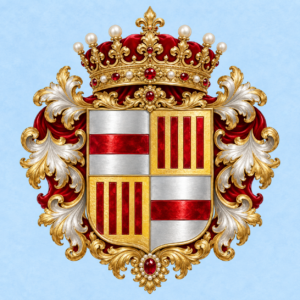
Principe di Salerno
89,90 €
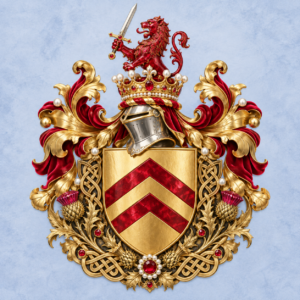
Earl of Strathearn
69,90 €
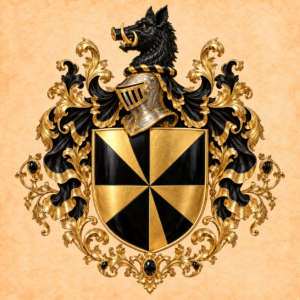
Baron de Loudon
39,90 €
In personal selection, it is worthwhile to pay attention to language and overall sound. An Italian title sounds different from a German form, even if both historically denote a similar rank.
Lord, Laird, and Lady Are Not Simply the Same
“Lord” is a multifaceted term in the British context. It can be part of various noble titles, a form of address, or the designation of a landowner. “Lady” also has multiple meanings and is used as a title or polite form of address depending on the context.
The Scottish “Laird” traditionally refers to a landowner and is not automatically equated with a peerage rank like Baron or Earl. This connection to landscape and ownership gives it a unique appeal.
Our personal Irish lord and lady titles, as well as Scottish laird and lady forms, are explained in detail on their own pages: Irish Lord & Lady and Scottish Laird & Lady.
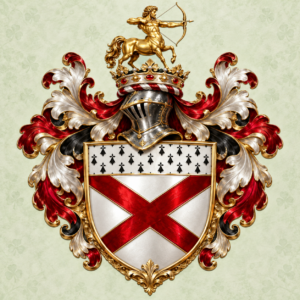
Lord of Kerry
49,90 €
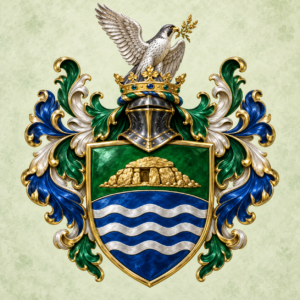
Lord of Strandhill
49,90 €
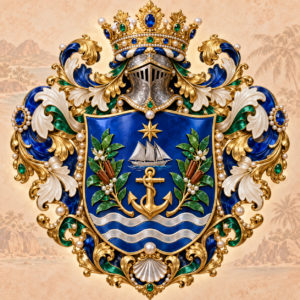
Seychellen Lord of Anse Boileau
89,90 €

Lord & Lady of Embu
39,90 €
Welcher Titel passt zu Ihnen?
Die Wahl Ihres Titels ist ein persönliches Statement.
Ein Adelstitel steht heute nicht mehr für alte Privilegien, sondern für Stil und Individualität. Ob als klangvolles Geschenk, als exklusives Zeichen für Ihren eigenen Namen oder als außergewöhnlicher Blickfang: Jeder Rang hat seinen ganz eigenen Charakter.
Finden Sie heraus, welcher Titel am besten Ihre Persönlichkeit widerspiegelt:

Herzog & Herzogin – Die absolute Spitzenklasse
Der Charakter: Majestätisch, selten und von maximaler klanglicher Wucht.
Für wen ideal? Für diejenigen, die keine halben Sachen machen. Als höchster Titel des Hochadels ist der Herzog das ultimative Statussymbol und ein unvergessliches Geschenk zu großen Jubiläen.
Fürst & Fürstin – Der exklusive Führungsanspruch
Der Charakter: Unabhängig, charismatisch und mit natürlicher Autorität.
Für wen ideal? Für Macher, Visionäre und Individualisten, die gerne eigene Akzente setzen und den souveränen Glanz eines echten Herrscherhauses schätzen.
Graf & Gräfin – Das Sinnbild europäischer Noblesse
Der Charakter: Souverän, traditionsreich und von edler Gelassenheit.
Für wen ideal? Der Inbegriff des Adels. Ideal für alle, die einen traditionsreichen, sofort wiedererkennbaren Klang suchen, der gleichermaßen Eindruck und Respekt vermittelt.
Baron & Baronin – Der charmante Klassiker
Der Charakter: Bodenständig, hanseatisch dezent und niemals aufdringlich.
Für wen ideal? Perfekt als eleganter Einstieg. Ein Titel, der auf Briefbögen, Visitenkarten oder bei Tischreservierungen sofort sympathisch auffällt, ohne übertrieben zu wirken.
Lord & Lady – Der britische Kultfaktor
Der Charakter: Exzentrisch, traditionsbewusst und international renommiert.
Für wen ideal? Der absolute Publikumsliebling für Freunde des englischen Lifestyles, Teetrinker, Schottland-Liebhaber oder einfach als geniales Geschenk mit Humor und Stil.
Arabische, Afrikanische & Asiatische Titel
Der Charakter: Exotisch, geheimnisvoll und absolut unverwechselbar. Ein Hauch von Orient, Asien & Weltgeschichte
Für wen ideal? Für Kosmopoliten, Weltenbummler und echte Individualisten, die sich bewusst vom europäischen Standard abheben wollen.