Lord & Lady of Ireland: Between Atlantic Winds, Ancient Castles, and Celtic Pride
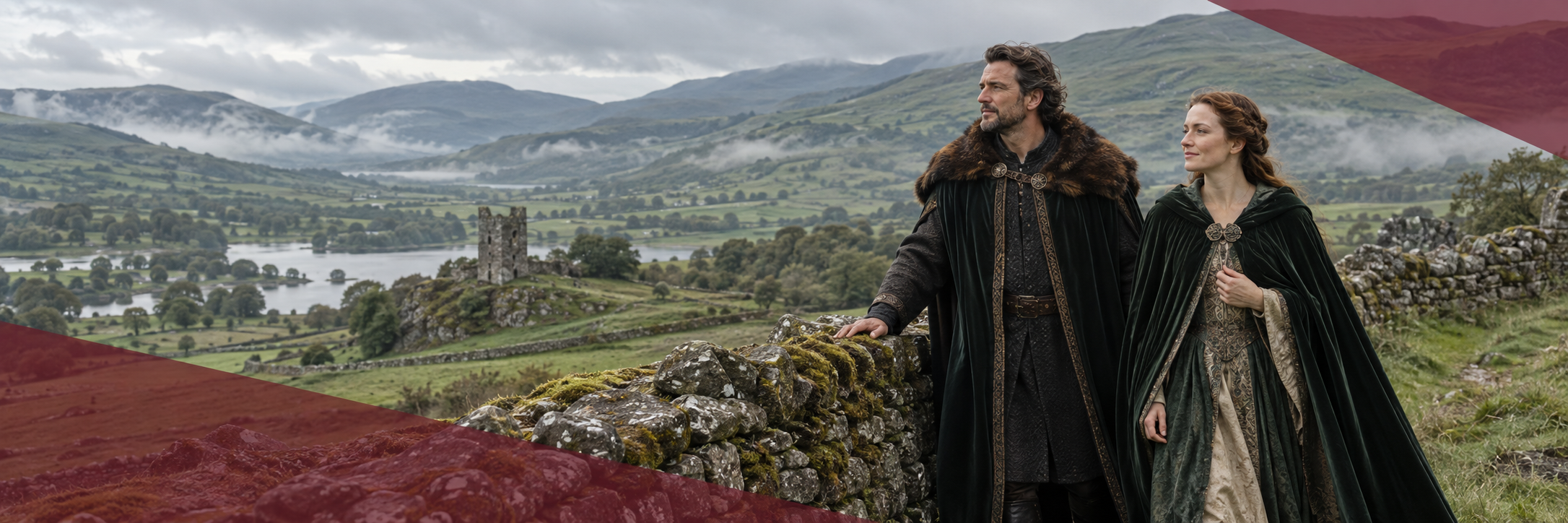
There are landscapes that exude a unique, almost magical tranquility – and Ireland stands at the forefront. When one thinks of the Emerald Isle, the salty wind of the roaring Atlantic is immediately felt, eyes are drawn to rugged cliffs, mist-covered castle ruins, and lush hills that glow in countless shades of green. Here, where ancient myths and centuries-old clan traditions remain vibrant in everyday life, the nobility possesses a distinctly recognizable character.
The connection of Lord & Lady of Ireland is more than just a pair of titles: it embodies a way of life that combines a love for nature with heartfelt nobility. An Irish Lord and his Lady impress not through stiff etiquette or distant coldness, but through worldly calm, witty humour, and that unpretentious hospitality that welcomes strangers as if they were old friends. It is the ideal aristonym for personalities with a sense of romance, character, and timeless understatement.
Lord of Kerry
Kerry: Where the Ocean Meets Ancient Mountains
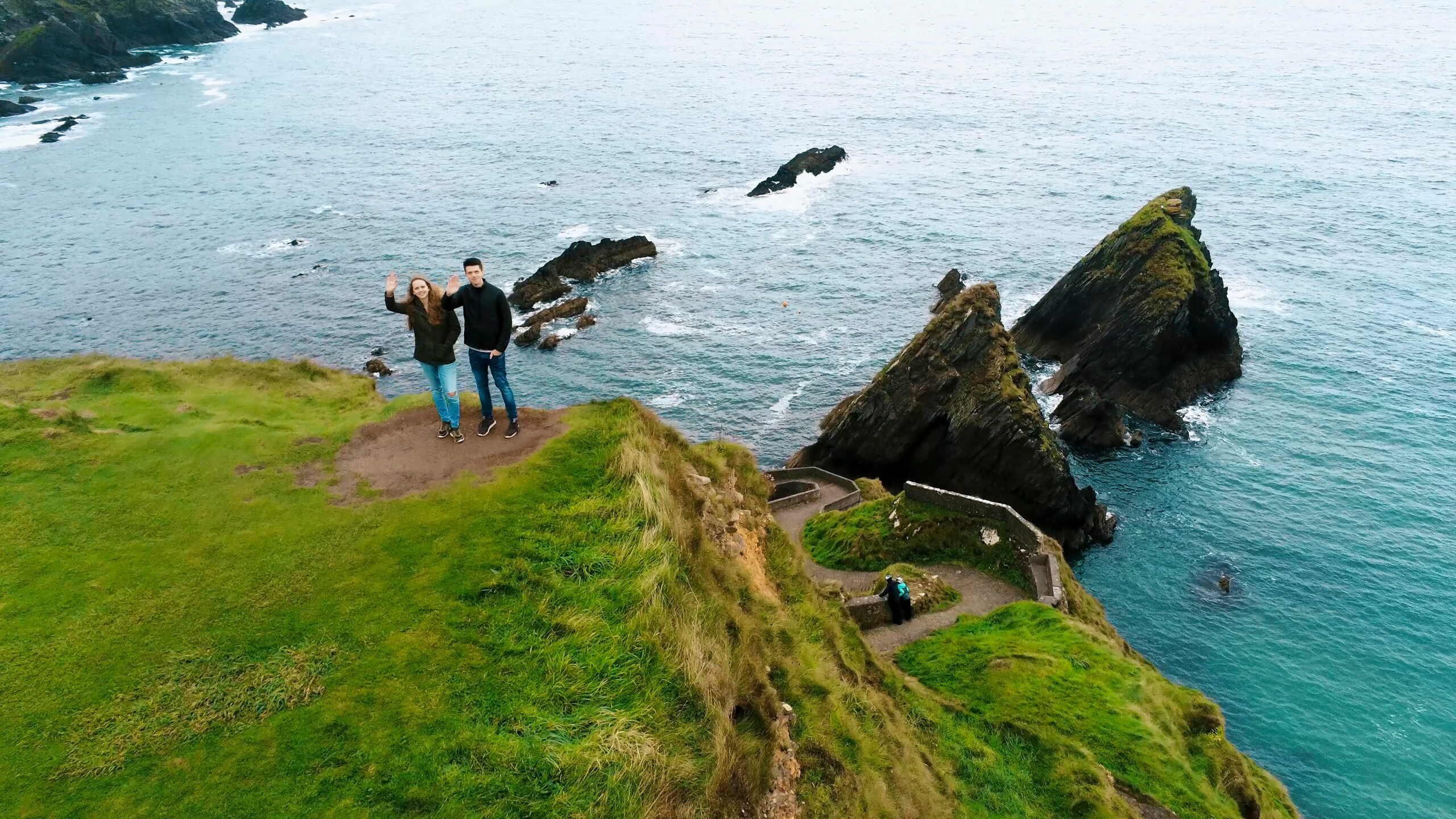
In the far southwest of the green isle lies a region that locals proudly call The Kingdom. In Kerry, the unbridled force of the Atlantic crashes against dramatically rugged cliffs, while inland, the majestic MacGillycuddy’s Reeks rise, Ireland’s highest mountains. Along the legendary scenic route of the Ring of Kerry and the Iveragh Peninsula, the light changes by the minute: just moments ago, the sea wind whipped silver spray over dark cliffs, and in the next moment, sunbeams break through the cloud cover, bathing deep blue lakes, enchanted bogs, and moss-covered oak forests in an almost otherworldly glow.
Thanks to the warm Gulf Stream, even subtropical gardens flourish here, with blooming rhododendrons and palm trees standing next to sturdy castle ruins. Kerry has always been a refuge of untamed freedom, shaped by the bold seafarers of the Skellig Islands and proud Gaelic clans. It is a landscape full of poetry and rugged grandeur that expands the spirit and has captivated poets, thinkers, and free spirits for centuries.
Lord & Lady of Kerry
Amidst this dramatic natural backdrop, the Lords of Kerry have written Irish history for centuries. Founded by the Anglo-Norman FitzMaurice dynasty, closely linked to the powerful FitzGeralds, they ruled from formidable fortresses like Lixnaw over vast stretches of land between mountains and sea. The title breathes the heritage of proud coastal seafarers, resilient clan alliances, and unwavering steadfastness against foreign powers.
As Lord of Kerry, one carries an aristonym of timeless, rugged elegance. It embodies the raw sovereignty of the wild Atlantic, combined with the deep pride of the ancient kingdom of Kerry. A title perfectly suited for free spirits and nature lovers with strong character, who wish to underscore their success with a primal attitude, foresight, and a sense of belonging to their homeland.
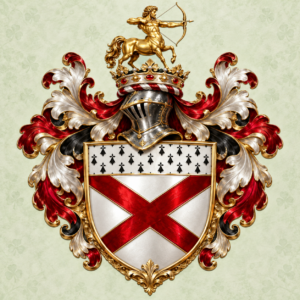
Lord of Kerry
49,90 €
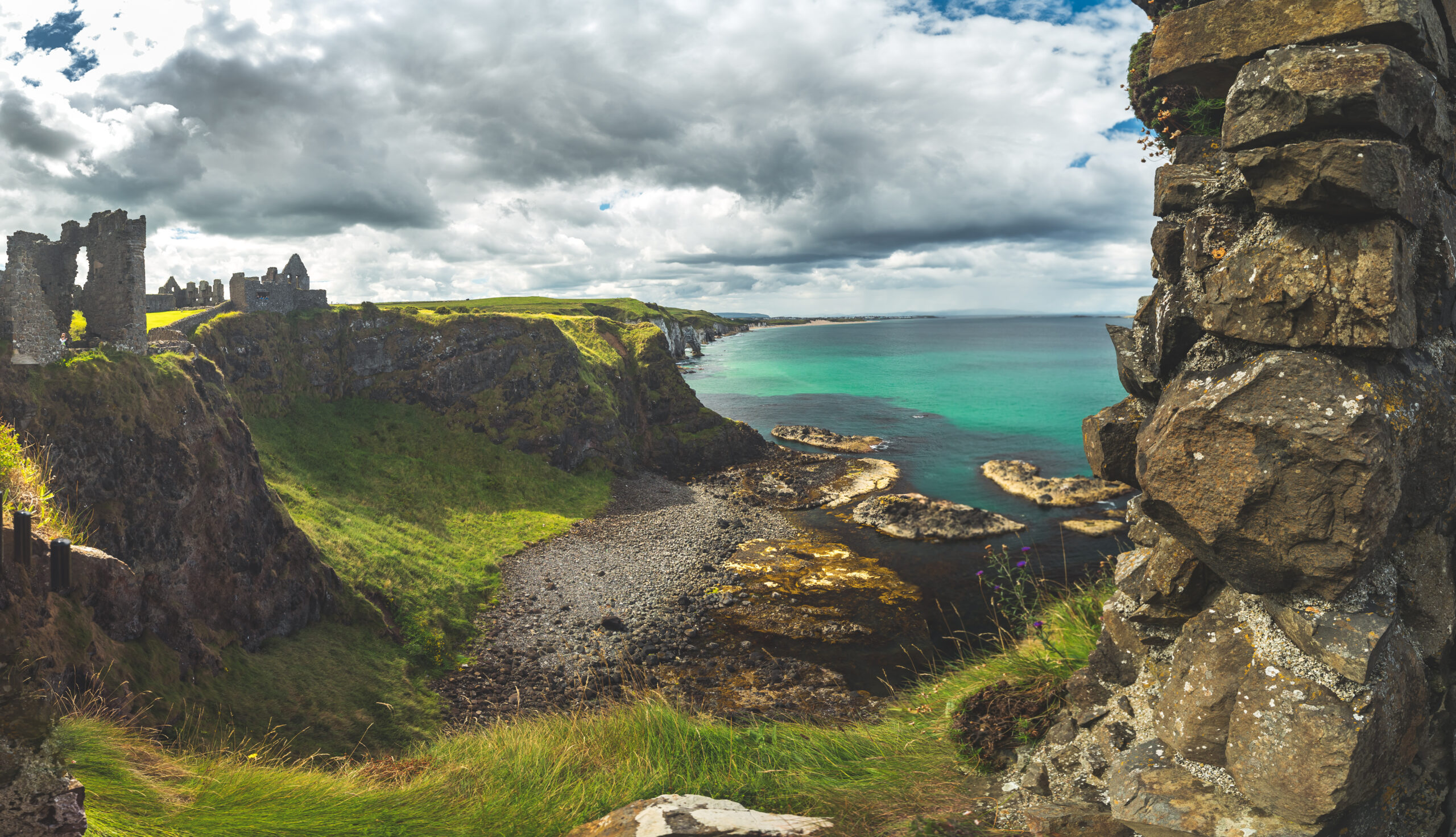

Grace O’Malley, known as Gráinne Mhaol, was the most feared pirate queen and Lady of Connacht in the 16th century. She commanded a powerful fleet of war galleons, ruled the rugged Irish west coast, and shamelessly extorted tolls from English merchant ships. The day after the birth of her son in the middle of the high seas, her ship was boarded by Algerian corsairs; Grace wrapped herself in a blanket, stormed on deck with two pistols, and single-handedly drove the attackers away. During her famous audience with Queen Elizabeth I in London, she steadfastly refused to kneel before the English monarch, as she considered herself an equal sovereign. To the horror of the entire court, she blew her nose into a precious lace handkerchief before the Queen and threw it directly into the burning flames of the hearth, as such a cloth was, according to Gaelic custom, far too impure for one’s own pocket after use.
That an Irish Lady could become an unyielding fortress commander in times of crisis was proven by Lady Elizabeth Fitzgerald, known as Black Bess. When enemy troops besieged her fortress during the Desmond Rebellions and the English commander threatened to hang her captured sons at the castle gates if she did not surrender, Elizabeth appeared on the battlements fully armed. She coldly called out to the besiegers that she was still young enough to bear another half dozen sons, but they would not enter these walls while she was alive. The attackers were so taken aback by her iron resolve that they called off the execution and soon withdrew without achieving their goal.
To finally bind the unpredictable Irish clan leaders to the crown, London devised the legal ruse known as Surrender and Regrant. Traditional Gaelic tribal chiefs traveled to London, officially ceded their ancient tribal lands to the English king, and immediately received them back as feudal fiefs along with noble titles such as “Earl of Tyrone” or “Baron of Upper Ossory.” The Irish lords graciously accepted the sealed documents, the English noble titles, and the fine garments – rode straight home and continued to rule there according to ancient Gaelic clan customs, as if the trip to England had never happened.
In the 18th century, the Anglo-Irish lords took eccentric feudalism to new heights, led by Lord Kingsborough and the noble ladies of Mitchelstown Castle. They erected massive palatial buildings with hundreds of rooms, celebrated endless drinking feasts, and had artificial Gothic ruins and monumental triumphal arches built in the middle of the bog, just to make the view from the castle window more dramatic. Since the Irish landed gentry had vast estates but chronically empty coffers, the lords preferred to settle their bills with barrels of whiskey, fine hunting dogs, or self-written promissory notes that were passed around among the nobility like play money, while creditors waited in vain at the castle gates.
One of the most eccentric icons of noble society was Lady Morgan, born Sydney Owenson, who stirred the refined London society with her bestseller The Wild Irish Girl. She styled herself as the patriotic National Lady, carrying a handy miniature harp from salon to salon, appearing in a uniquely created combination of rustic Gaelic peasant dress and Parisian lace corset. With her unconventional manner, she unleashed a veritable hysteria around the Green Isle: suddenly, highborn ladies in London wore tie pins made of Irish peat and decorated their reception rooms with thistles and heather to bring a touch of Celtic free spirit into their homes.
Lord of Strandhill: The Roar of Waves and Celtic Gold
County Sligo, Northwest Coast
At the foot of the distinctive flat-topped mountain Knocknarea, the North Atlantic rolls in with full force against the wide sandy beaches of Strandhill. Dominated by the monumental stone grave of the legendary warrior queen Maeve, ancient Celtic myths meet salty sea spray, wandering dunes, and harsh coastal winds. The region has been shaped for millennia by quirky fishermen, seafarers, and poets. The title reflects the untamed maritime nature of Ireland’s northwest, where the rough element of the sea connects directly with prehistoric legends.
Baron of Athenry: Stronghold of Ballads and Knights
County Galway, Connacht
In the midst of the vast, fertile plains of Galway rise the massive stone walls of the Norman castle of the De Berminghams. As the most important fortified market town of the West, Athenry looks back on a tumultuous history of chivalric feuds, proud independence, and deep connection to the homeland, immortalized in the world-famous ballad. The medieval town gates, the Dominican monastery, and the imposing watchtowers testify to an era when resilient protection and a close-knit village community formed the foundation of coexistence.
Lord of Roscommon: The Bulwark of Kings
County Roscommon, Central Connacht
Between the tranquil river courses of the Shannon, vast bogs, and fertile hill ranges lay the ancestral power centre of the Irish high kings of the O’Conor dynasty. The monumental Roscommon Castle with its massive round towers still attests to the strategic importance of this region in the heart of Connacht. The landscape breathes the tranquility of extensive pastures and ancient feudal seats, whose history is deeply rooted in Gaelic early medieval times and has shaped the political fate of the Irish West for centuries.
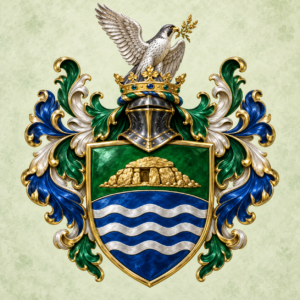
Lord of Strandhill
49,90 €
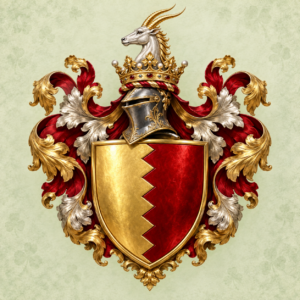
Baron of Athenry
39,90 €
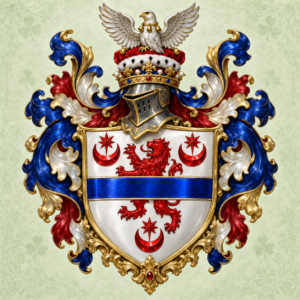
Lord of Roscommon
49,90 €
Lord of Offaly: Green Heart and Oak Bastion
County Offaly, Leinster
In the Irish Midlands, bordered by the gentle slopes of the Slieve Bloom Mountains and vast peat bogs, lies the historic territory of the O’Connor Faly clan. In the High Middle Ages, the Anglo-Norman Geraldines built their first powerful bastions here, shaping one of the island’s most influential dynasties. The region is known for its dense ancient oak forests, fertile soil, and solitary monastic sites like Clonmacnoise, which have rested on the banks of the Shannon for over a millennium as centers of learned culture.
PNG
Earl of Desmond: The Legend of the Proud South
Munster, Southwest Ireland
The historical territory of Desmond extended over large parts of present-day counties Cork and Kerry, from the mountains of Munster to the fertile river valleys of the Blackwater. Under the southern FitzGeralds, a powerful, almost autonomous principality emerged here, maintaining its own laws and merging Gaelic culture with Norman fortitude. Numerous castle ruins, dense forests, and sheltered bays still tell of an era of proud self-assertion and chivalric splendour in the southwest of Ireland.
PNG
Viscount of Buttevant: Forward Momentum in the Fertile Valley
County Cork, Munster
In the fertile valley of the River Awbeg lies the historic market town of Buttevant, closely linked to the Anglo-Norman family of the Barrys. The name of the town derives directly from their French battle cry Boutez-en-avant, which described the bold advance of the knights. Surrounded by extensive pastures, ancient mills, and the Gothic arches of the Franciscan abbey, Buttevant has formed a flourishing centre of rural horse breeding, monastic scholarship, and fortified estates in the heart of County Cork.
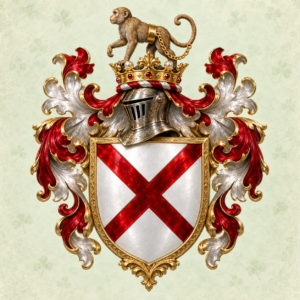
Lord of Offaly
49,90 €
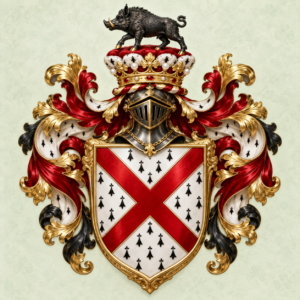
Earl of Desmond
69,90 €
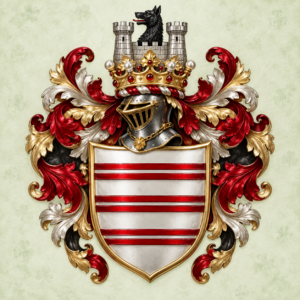
Viscount of Buttevant
49,90 €
The Understatement of Irish Country Life: Attitude and Warmth
True Irish nobility reveals itself not in loud ostentation, but in a culture of quiet restraint. While other traditions rely on stiff formality and distant etiquette, the Irish nobility thrives on grounded permanence. Daily life on the estates follows the rhythm of the seasons, the rustle of the Atlantic wind, and an inherent closeness to nature.
Here, authenticity counts: handwoven Donegal tweed that withstands every rain shower, coarsely knitted wool sweaters from the wind-swept Aran Islands, and sturdy, welted leather boots that are worn across dew-drenched meadows and muddy forest paths. Clothing here is not a fashion statement, but a faithful companion over generations, marked by patina and artisanal perfection.
After long walks through heath and bog, life shifts to the wood-paneled salons of the old manor houses. There, the turf fire crackles in the open hearth, filling the room with its unmistakable, earthy scent. Before filled bookshelves of first editions and historical maps, hunting dogs rest at the feet of heavy leather armchairs, while in a glass, a full-bodied Irish Single Pot Still whiskey slowly reveals its amber reflections.
In this ambiance, perhaps the greatest peculiarity of Irish country life is revealed: the perfected art of combining the highest nobility with disarming warmth. Aristocratic calm does not exclude sociability; rather, it seeks it out. With witty banter, spontaneous visits, and profound conversations, every guest is met on equal terms – a relaxed sovereignty that draws its brilliance from lived humanity and timeless understatement.
The Soul of Ireland: Clans, Normans, and Gaelic Lordships
Long before European courts invented rigid court ceremonial, the power structure of Ireland was based on an ancient web of bloodline, land, and oath. The green isle was divided into dozens of small kingdoms, the Tuatha, each led by a Rí. Above them reigned the High King on the sacred hill of Tara as a symbolic bond of a proud tribal society. Great dynasties like the O’Neill, O’Brien, and O’Conor guided their clans according to the traditional Brehon Laws, a highly developed legal system that prioritized loyalty to the community and personal reputation over centralised arbitrariness. Leadership in this Gaelic world meant not an abstract crown, but the real obligation to defend one’s people and ancestral grazing land with the sword.
With the landing of the Anglo-Normans under Richard de Clare in the late 12th century, two worlds collided, which surprisingly quickly merged into a unique symbiosis. Instead of eradicating Gaelic culture, the Norman knightly families like the FitzGeralds, De Burghs, and Butlers quickly succumbed to the island’s charm. They adopted the Irish language, dressed in local fabrics, married into the established clans, and promoted Gaelic bards. From foreign conquerors, they became those legendary lords whom contemporary chroniclers soon described as hiberniores Hibernis ipsis: more Irish than the Irish themselves. From this fertile union of Norman fortification architecture and Celtic desire for freedom arose the great feudal lordships that gave the island its still visible character today.
From this historical soil emerged the Irish feudal lordships, which fundamentally differ from the courtly nobility of the European mainland. An Irish lord was never merely a courtier vying for the favour of a distant monarch amidst the splendour of castle gardens. His power was rooted directly in his fortified castles, the vast bogs, and the unwavering loyalty of his tenants and clan members. This centuries-old hard-won independence lends an Irish title a uniquely untamed dignity to this day. It stands for autonomy, deep-rootedness in one’s homeland, and that indomitable spirit that defies wind and weather, rather than bowing to the conventions of a foreign authority.