
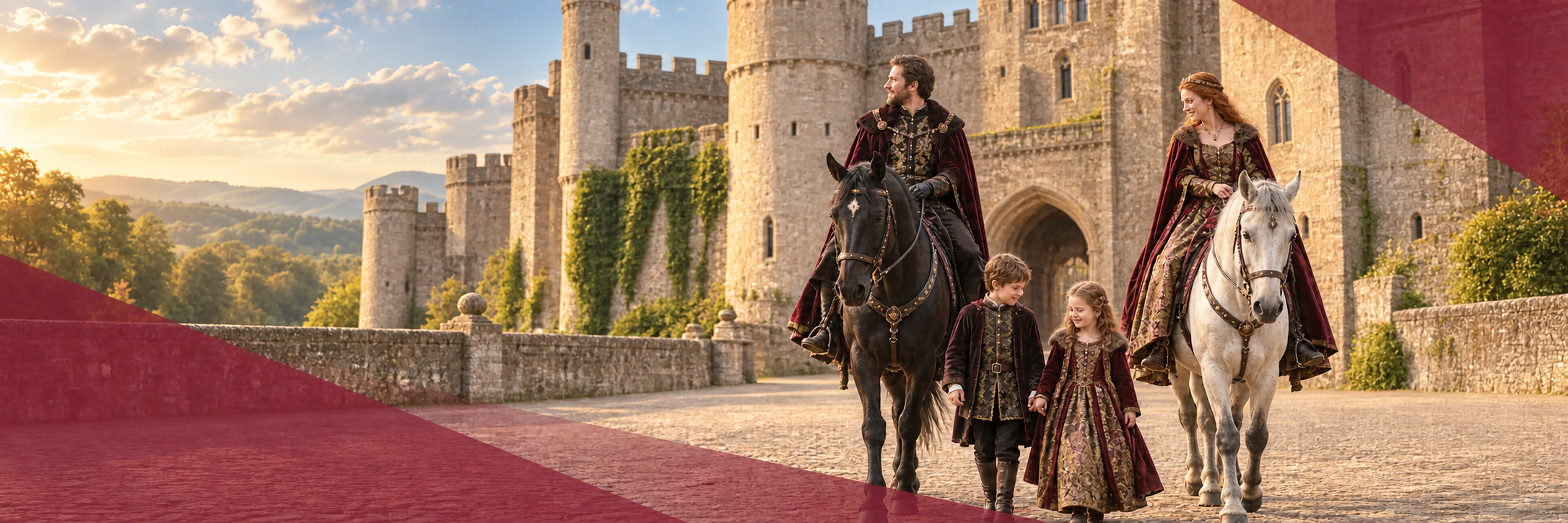
The Seal of True Grandezza: Why the Title of Count Continues to Fascinate
Among all the splendid titles that European aristocracy has produced over the centuries, the title of Count occupies a uniquely special position. While princes and kings often hovered in unattainable heights and the simple country nobility sometimes remained in the shadows of history, the Count always struck the golden note of nobility. He embodied influence, breadth, and wealth, without ever losing touch with social life. Anyone entering a room as a Count or Countess instantly enjoyed that respectful regard that only cultivated culture and genuine demeanor can generate.
The fascination of this rank lies primarily in its perfect balance. A Count’s title sounds powerful and sovereign, yet possesses an unmistakable touch of worldly sophistication. It stands for extensive estates, magnificent libraries, refined artistic taste, and that inimitable self-awareness of individuals who know who they are and what they represent. Countly elegance never imposes itself loudly; it manifests through its mere presence, through perfected manners, and a fine sensitivity to the beautiful aspects of existence.
Particularly appealing is the fact that behind the same rank in every European country lies a completely different, fascinating personality. Depending on whether one’s imagination wanders to sturdy Rhine castles, cosmopolitan Parisian townhouses, windswept English country estates, or sun-drenched Tuscan villas, the Count unfolds his own unique magic.
Today, anyone choosing this time-honoured name selects far more than a historical label. It is an invitation to an attitude that enriches everyday life with brilliance, a charming wink in dealing with traditions, and the joy of enhancing one’s presence with an everlasting piece of European grandezza.

The life of medieval Counts and Countesses was far less decorous than in romantic knightly epics, instead marked by absurd warfare, extreme excesses, and hair-raising mishaps of noble daily life.
One of the most legendary episodes of female warfare was delivered by Agnes Randolph, the Scottish Countess of Dunbar, who was reverently called “Black Agnes” by both friend and foe. When in 1338 an English force relentlessly besieged her fortress for five months while her husband fought on distant battlefields, she defended the battlements not with panic, but with cutting mockery. After the English catapults hurled ton-weight boulders against the castle walls, Agnes demonstratively sent her ladies-in-waiting, dressed in the finest silk gowns, before the eyes of the enemy archers to casually wipe away the dust with bejeweled handkerchiefs. When the attackers finally rolled up a massive wooden siege engine called the “Sow,” she called out to the enemy commander from the battlements to be careful that his Sow didn’t die in the dirt, and at that moment let a gigantic boulder crash down, turning the outrageously expensive war machine into kindling. The English troops were so demoralised by such audacity that they abandoned the siege and retreated, gritting their teeth. To this day, Agnes is regarded in Scotland as the prime example that one can hold a fortress solely with scorn, charm, and perfect timing.
How hopelessly some Counts swung between blind rage and panicked fear of purgatory is evidenced by the real biography of Count Fulko III of Anjou, aptly called “the Black.” He was one of the most notorious feudal lords of the 11th century, having burned his own wife at the stake while still in her wedding dress, murdered, pillaged, and looted across the land for decades as if there were no tomorrow. When he was eventually seized by sheer panic at God’s wrath after a blood frenzy, he abruptly switched from monster to penitent: He undertook four barefoot pilgrimages across Europe to Jerusalem, where he had his servants drag him through the dirt with ropes around his neck and shout at him under harsh lashes to beg the Lord to finally forgive the wretched traitor Fulko. Hardly had he secured absolution and returned home safely when his piety vanished in an instant, and he immediately instigated the next bloody feuds against his neighbours. This eternal oscillation between brigandry and theatrical remorse was a grotesque spectacle even by medieval standards, but in the end, it secured his family enormous lands.
That pomp, noble pride, and the sheer mass of dignitaries could lead to an unimaginably unglamorous catastrophe is evidenced by the infamous Erfurt Latrine Fall of 1184. At a court assembly of King Henry VI, dozens of nobles gathered on the upper floor of the cathedral chapter house to settle a bitter territorial dispute. Under the enormous weight of the closely packed feudal lords and their heavy, fur-trimmed velvet garments, the rotten wooden beam ceiling suddenly gave way with a bone-shaking crash. The assembled elite fell freely through the ground floor directly into the overflowing cesspit of the building below. Several high-ranking imperial Counts – including Count Friedrich of Abenberg, Count Heinrich of Schwarzburg, and Count Gozmar of Ziegenhain – met a pitiful, decidedly unknightly death by suffocation in the latrine. King Henry VI survived the embarrassing tragedy only because he instinctively grabbed the stone window arches while falling and clung there until help arrived with ladders. The incident went down in the chronicles as perhaps the most unappetising accident in German imperial history and dampened the nobility’s celebratory spirits for months.
Some Counts were so eager for their intellectual reputation that they did not even need to master the alphabet. Count Baldwin II of Guînes was regarded in the late 12th century as one of the most educated men in his region and built a gigantic palace library by the standards of the time, which evoked pure envy among scholars. The catch of this splendid appearance: The Count could neither read nor write. To still participate in discussions at dining tables with clerics and bishops about Latin Church Fathers, ancient myths, and philosophy, he employed an entire staff of scribes who had to translate the works into French for him day and night and read them aloud tirelessly. Baldwin had an excellent memory, learned the passages by heart, and quoted the ancient classics at princely banquets so confidently that no one doubted his scholarly knowledge. He impressively demonstrated to the noble society that true class arrogance requires no education, but merely enough staff to read the education aloud to you.
Even death did not free a Count from his burdensome bureaucratic duties, as the quirky phenomenon of the “Count on Wheels” shows. According to ancient and medieval law, the feudal lordship of a noble often lapsed the moment he was no longer physically present, which created devastating legal gaps during prolonged military campaigns and peace negotiations. When Count Wilhelm IV of Jülich was killed in a nighttime raid in Aachen in 1278, his allies urgently needed his legal status for the upcoming negotiations and handovers. They hastily embalmed the corpse, strapped him upright in full knightly armor onto a specially constructed wooden cart, and dragged him behind the army through the land for weeks. Since the documents and orders had to be formally accepted in court as “issued by the present Count,” the judges actually approved this bizarre spectacle. Thus, the deceased ruler perfectly fulfilled his military duties even after his death, as long as the cart driver ensured that the helmet did not slip off the pedestal.
The German Count: Sturdy Castles, Deep Forests, and Reliability
In the heart of Central Europe, under the vast sky of the Holy Roman Empire, the title of Count developed an aura of remarkable permanence and deep regional pride. The German Count was no mere ornament at distant courts, but the undisputed lord over vast lands, dense forests, and sturdy hilltop castles. His word carried weight when the hunting horns sounded in the autumn forest or when discussions were held in the council chambers about the harvest, grazing rights, and the protection of citizens.
From the former administrators of imperial districts grew families that governed their dominions with discipline and care for centuries. A German Count’s residence was rarely a whimsical pleasure garden, but rather a centre of solid living, filled with leather-bound chronicles, crackling fires, and hunting rooms with heavy oak wood. This rootedness in land and soil gave the German Count a distinctive profile: He was regarded as sincere, duty-bound, and reliable, a nobleman who preferred to shine through tangible deeds rather than empty gestures.
Even as, in the Baroque and Romantic periods, residences transformed into magnificent palace complexes, this character trait remained intact. The German Count houses maintained a balance between worldly scholarship and warm hospitality. They appreciated exquisite wines from their own vineyards, promoted science, and lived a nobility that was distinguished by its quiet, unshakeable dignity.
Those drawn to this heritage choose a title with palpable grounding and strong substance. A German Count’s name stands for personalities who value tradition, authenticity, and a stylish presence without artificial embellishments – ideal for those who wish to crown their own success with a touch of venerable German cultural history.

Burggraf von Dohna
69,90 €

Graf von Falkenstein
69,90 €

Graf von Rieneck
69,90 €
The French Comte: Parisian Salons, Champagne, and Versailles
Across the Rhine, in the heart of France, the countly rank transformed into the epitome of worldly spirit and enchanting sophistication. The French word Comte, which derives from the Latin court companion Comes, has always carried the aura of royal proximity. Nowhere else in the world was the art of noble living celebrated with such ease and dedication as between the sun-drenched Châteaux along the Loire and the mirror halls of the French crown.
A French Comte was the absolute master of the social stage. He felt equally at home in the noble estates of his ancestors as in the splendid literary salons of Paris, where poets, philosophers, and politicians vied for his favour. Here, it was not only the weight of an old name that mattered, but the art of polished conversation, the sharp wit, and that refined savoir-vivre that turned a simple dinner into an unforgettable feast full of champagne and musical delicacies.
The ladies by their side were in no way inferior to the gentlemen: A French Countess was regarded throughout Europe as the undisputed trendsetter. She dictated fashion, promoted the arts, and knew how to combine influence with perfect grace. The French nobility understood like no other how to showcase luxury not merely as ostentation, but to live it as effortless self-evidence and pure joy of life.
Those who choose the sound of the French countly title bring this inimitable flair of lightness, romance, and Parisian elegance into their lives. It is the perfect rank for connoisseurs, bon vivants, and free spirits who wish to stylishly express their sense of aesthetics, fine cuisine, and the unmistakable scent of French château culture.
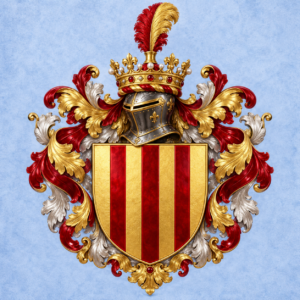
Comte de Foix
69,90 €
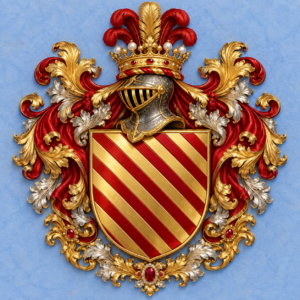
Vicomte de Turenne
49,90 €

Comte d’Armagnac
69,90 €
The British Earl: Tweed, Savile Row, and the Art of Understatement
Crossing the English Channel to the British Isles, one encounters perhaps the most idiosyncratic and fascinating variant of the countly rank. While the continent almost exclusively relied on Romance language roots, the British retained their ancient, Scandinavian-influenced term: Earl. Only the lady by his side adopted the continental elegance as Countess, which gives the couple a unique, almost legendary allure to this day.
A British Earl is the living embodiment of that nobility which need not be loud to dominate an entire room. His domain consists of the expansive, ancient tree-lined estates in the gentle hills of England or Scotland. Here, perfectly tailored Harris tweed meets comfortable wellington boots, and the love of noble hunting dogs and purebred thoroughbreds seamlessly blends with exquisite family libraries full of precious first editions.
In London, the Earl strolls with a natural ease through the clubs of the St. James’s District and the tailoring shops of Savile Row, which are unmatched worldwide. The British aristocracy practices the high art of understatement: One does not possess things to show off, but because they are of timeless quality, handcrafted, and meant for generations. An Earl impresses with dry humour, impeccable politeness, and that enviable calm that masters even the greatest storms of life with a sip of first-class single malt or a fine cup of tea.
Choosing the British profile means opting for the noblest form of sovereign restraint. It is the ideal title for individuals with a sense of classic British charm, fine tailoring, tradition, and that aristocratic coolness that never goes out of style.

Earl of Oxford
69,90 €

Viscount of Beaumont
49,90 €
The Mediterranean Lightness: The Conte in Italy and the Conde in Spain
Under the warm sun of the south, the countly dignity takes on a completely new, vibrant form. When one thinks of Italy, one immediately envisions sun-drenched cypress avenues, Tuscan estates with centuries-old olive groves, and the magnificent palaces of Venice, Rome, or Florence. It is here that the Italian Conte reigns. In the cradle of the Renaissance, the nobility was never detached from the world; they lived amidst the pulsating events, surrounded by masterful sculpture, painting, and opera arias that one listened to through wide-open windows into the balmy night.
A Conte embodies the famous Sprezzatura – that remarkable ability to make even the most difficult things appear with disarming ease and innate elegance. The Italian noble count combines pride in ancient ancestry with an insatiable passion for the moment. One enjoys espresso in the piazza, the bespoke linen shirt, and passionate conversations about art, politics, and fine wines. Here, grandezza is not a rigid ceremony, but a vibrant pulse that fills existence with warmth, style, and charm.
In neighbouring Spain, the Conde bestows this Mediterranean soul with a proud, almost knightly gravitas. Shaped by the ancient kingdoms of Castile and Aragon, the Spanish Count is always surrounded by the aura of flamenco, Moorish palace architecture, and noble Andalusian horses. The Conde is regarded as a loyal guardian of his family and his land, imbued with a fiery sense of honour and loyalty, which is simultaneously paired with worldly sovereignty.
Those who choose the Mediterranean sound of the countly title bring pure joy of life and the sunny disposition of the south into their everyday lives. It is the ideal title for people with great hearts, an appreciation for art, and that irresistible charisma that celebrates the beautiful moments of life.
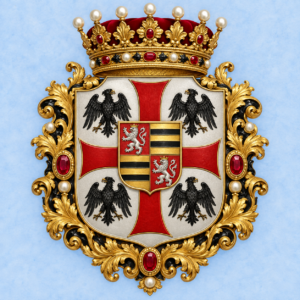
Conte di Guastalla
69,90 €

Vizconde de Rocabertí
49,90 €
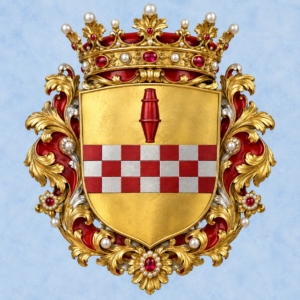
Conte di Spinola
69,90 €
Nobility in Everyday Life: Which Count Resides in You?
If European history proves one thing impressively, it is the fact that true nobility has always been a matter of character and personal presence. Whether it is the sturdy reliability and connection to nature of the German Count, the witty savoir-vivre of the French Comte, the distinguished understatement of the British Earl, or the sunny zest for life of the Italian Conte: Each of these time-honoured names opens a fascinating stage to underscore one’s personality with style and spirit.
Today, no one demands the construction of a fortified fortress or the management of vast provinces to infuse this brilliance with life. The allure of a historical Count title lies rather in the subtle joy of the extraordinary that it brings into modern everyday life. It adorns private stationery, lends an unmistakable note to business cards, and ensures that charming moment of refined grandezza during hotel bookings, restaurant visits, or among friends, which lingers long in memory.
At the same time, the appointment as Count or Countess is one of the most exclusive and original gifts imaginable. It is a compliment to a special person that goes far beyond material things – a tangible symbol of appreciation, attitude, and a sense of the extraordinary, accompanied by an artistically designed certificate that becomes a noble focal point on any wall.
Ultimately, the choice of the right title is the choice of one’s favourite world. Those who take this noble step not only celebrate the history of Europe but also gift themselves a piece of lived exclusivity. It only takes a little courage for grandezza, a mischievous smile, and the willingness to meet everyday life with that countly charm that has effortlessly endured through the centuries.
Count & Countess Worldwide: A Title that Spans the Earth
The fascination with the title of Count does not end at the outer borders of Western Europe. Every great world empire historically faced the same challenge: How does one govern and manage a vast territory beyond the splendid palaces of the capital? The solution lay everywhere on the globe in loyal, influential governors who dispensed justice, mobilised armies, and collected taxes. Although the names and languages varied, the essence was always the same: A man and a woman of stature, who commanded vast regions and still stand for sovereign grandezza today.
The Tsardom: From Proud Boyars to Russian Counts
In the endless realm of the Russian Tsars, the Boyars formed the powerful backbone of the warrior caste and state administration for centuries. Equipped with vast lands, dense forests, and countless villages, these regional lords often acted as independent rulers. When Peter the Great modernised and opened the vast empire to the West, he officially introduced the title of Count into the Russian court hierarchy. The martial lords of the steppes became polished aristocrats of European rank, whose wealth in furs, gold, and lands is legendary to this day.
The Ottoman Empire: The Power of the Beys and Pashas
At the court of Constantinople and across the provinces of the East, the Sultan’s governors bore other sonorous honorary titles. Acting as a direct counterpart to the European Count, the Bey enjoyed undisputed authority as the administrator of a sancak – a whole military and administrative district. If he held even greater military weight, he adorned himself with the title of Pasha. Both ranks combined strategic responsibility with that incomparable oriental pomp of silk, noble Arabian stallions, and masterful palace architecture, which still tells tales of power and grandeur today.
The Arab World: Sheikhs as Lords over Oases and Trade Routes
In the Arab sphere, the countly ideal is reflected in the leadership role of high-ranking Sheikhs. A Sheikh was and is far more than a simple elder; he embodies the esteemed head of an entire region, overseeing oases, lucrative trade routes, and proud tribes. His authority stemmed from unwavering loyalty, diplomatic wisdom, and that legendary oriental hospitality that treats strangers like kings. It is a rank for personalities with character strength, who generate respect through lived values and generosity.
Far Eastern Honour: Asia’s Princes and the Hakushaku
In East Asia, finely calibrated counterparts to the European countly dignity also existed. In feudal Japan, the Daimyō ruled over entire provinces, always protected by their loyal samurai and driven by the honour code of Bushidō. When the country modernised its nobility and rank system during the Meiji Restoration, the title of Count was officially introduced as Hakushaku, corresponding to the ancient imperial court rank of Bo in ancient China. These Far Eastern ranks still stand for iron discipline, cultivated restraint, and deep loyalty to one’s ancestors.
The New World: South America’s Grandees and Condes
On the other side of the Atlantic, the countly tradition lived on in the Spanish viceroyalties from Peru to New Spain. The crown bestowed the title of Conde on deserving pioneers, mine owners, and large landowners who built gigantic haciendas in the jungle, on the slopes of the Andes, or in the fertile valleys. These South American Counts combined Iberian colonial pride with the vastness and temperament of the New World. They lived a passionate, sun-drenched nobility that was reflected in magnificent city palaces from Lima to Mexico City.
Which World Count Matches Your Character?
Whether you feel drawn to the quiet grandeur of Russian forests, the fiery pride of South America, the wisdom of oases, or the Far Eastern discipline: The counterpart to the Count is everywhere on Earth the epitome of worldly sovereignty. To hold this title means not to set limits but to present oneself as a cosmopolitan. It is a charming confession to style, history, and global stature – perfect for business cards, as a noble focal point on the wall, or as an exclusive gift for someone who has the world at their feet.